Product Description
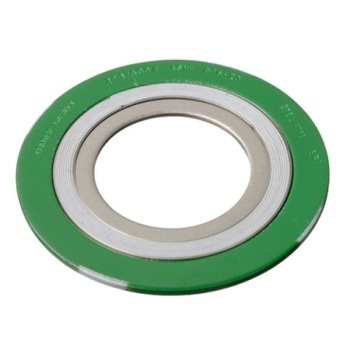
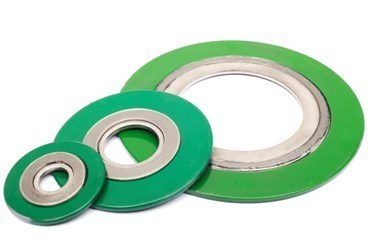
Spiral Wound Metallic Gaskets
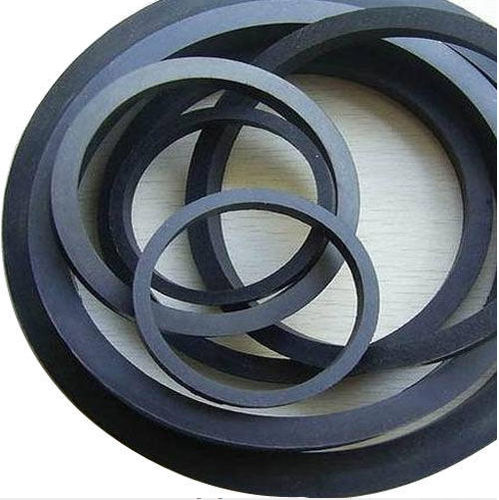
We have attained and maintained our reputation in the market by trading and exporting an optimum range of Spiral Wound Metallic Gaskets. These gaskets are widely find their application in flanges to prevent the liquid leakage. Our Spiral Wound Metallic Gaskets is made using alternative layers of metal strip and filler material under the guidance of skilled professionals at our vendors's premise. Offered in circular and non-circular shapes, these gaskets are appreciated for their characteristics like temperature resistance, leak proof quality and durability.
Filler Material and Metal used:
- The Metal Strip and the centering Ring may generally be of S.S. 304 or S.S. 316 and Low Carbon Steel.
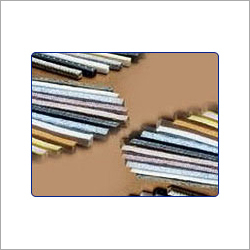
- It may consist of Asbestos (mainly, Compressed Asbestos Fibre Sheets) Grafoil (Pure Graphite Strips) and in some cases PTFE, depending upon gasket conditions.
Metal and Metal Jacketed Gaskets:
- Metal Gaskets are made of:
- Pure metal sheets in specified dimensions (i.e. Inner diameter & outer diameter and thickness).
- Stainless Steel
- Copper, Aluminum
- Metal Jacketed Gaskets are made of:
- Metal Jackets
- Filler Material (Asbestos, Metal Jacketed Gaskets)
- Copper, Aluminum, Lead, Soft Steel and Stainless Steel.
There are three types of Metal Jacketed Gaskets:
- Single Jacketed Gaskets
- Double Jacketed Gaskets
- Overlapping Jacketed Gaskets
Properties:
- These are robust and simple to install
- Suitable for use across a wide range gasket stress range
- The outer guide ring simplifies assembly and prevents blow-out of gasket
- Used to seal fluid pressures upto 400 bars and from cryogenic temperatures upto 1000oC
- These gaskets are easy to remove after service and does not cause any damage to the flange faces
- The gasket can be tailored to suit a wide variety of operating conditions by combining different winding materials and metals
How To Order:
Please specify the following when ordering Spiral Wound Gaskets.
- Type of Spiral Wound Gasket required
- Standard of the gasket (flange standard)
- Nominal size and pressure class
- Gasket Thickness
- Quantity
- Material
- Inner Ring
- Metal winding
- Filler
- Outer Ring
Product details
| Material | Stainless steel |
| Shape | Spiral |
| Type | Gasket |
| Brand | JK |
| Thickness | 2.5 mm |
Exceptional Sealing PerformanceSpiral wound metallic gaskets are engineered for high-temperature and high-pressure environments, delivering robust sealing even under severe operating conditions. Their unique structure combines metal and flexible filler materials, offering exceptional resilience and low leakage rates, making them ideal for demanding process and sealing needs.
Versatile Applications and CustomizationThese gaskets are versatile, adaptable for use in pipelines, heat exchangers, valve bonnets, and flanges. With options for basic, inner ring, outer ring, and combined ring types, and a broad range of sizes from 1/2 inch to 60 inchincluding custom dimensionsthey can be tailored for specific technical requirements across various industries.
Compliance and ReliabilityManufactured in accordance with international standards such as ASME B16.20, DIN, JIS, BS, and IS, spiral wound metallic gaskets provide reliable performance. Rigorous testing ensures leakage rates are below 1.0x10 mbarl/s, and surface finishes meet strict RA < 6.3 m requirements for optimal flange mating, ensuring long-lasting, safe sealing.
FAQs of Spiral Wound Metallic Gaskets:
Q: How do spiral wound metallic gaskets ensure a reliable seal in cycle operations?
A: Spiral wound metallic gaskets are constructed with alternating layers of metal strip and flexible fillersuch as graphite or PTFEwhich provide high resilience. This structure allows the gasket to recover from temperature and pressure changes, ensuring a stable seal even with frequent cycling in demanding pipeline or equipment environments.
Q: What are the benefits of choosing different filler materials like graphite, PTFE, asbestos, or ceramic?
A: Each filler material offers specific advantages: graphite delivers excellent temperature resistance (up to 550C) and chemical stability; PTFE is suitable for aggressive chemicals and lower temperatures (up to 260C); asbestos and ceramic may be selected for specialized thermal or chemical applications. The choice depends on your medium, temperature, and process requirements.
Q: When should I consult the manufacturer for installation torque?
A: Installation torque is crucial for effective gasket performance and depends on the flange class and gasket size. It is recommended to consult the manufacturer prior to installation to ensure the correct torque is used, optimizing sealing performance and preventing damage to gasket or flange.
Q: Where can spiral wound metallic gaskets be used?
A: These gaskets are suitable for high-temperature and high-pressure sealing applications in locations such as pipelines, heat exchangers, valve bonnets, and flanges. They serve industries handling acids, alkalis, oils, gases, steam, water, and various chemical solutions, including power plants and chemical processing facilities.
Q: What is the process for customizing spiral wound metallic gaskets to specific requirements?
A: Customization typically involves selecting the appropriate metal and filler type, ring configuration (basic, inner, outer, both), thickness (from 2 mm to 7 mm), and size (1/2 inch to 60 inch). Manufacturers will also adapt the gasket to meet standards such as ASME, DIN, JIS, BS, or IS, ensuring compatibility with your system.
Q: How does the recommended surface finish (RA < 6.3 m) impact gasket performance?
A: Achieving a surface finish less than RA < 6.3 m on mating flanges helps facilitate optimum gasket compression and minimizes leakage rates. This smoothness ensures that the gasket can conform tightly to the flange surface, enhancing the reliability of the seal in high-pressure applications.
Q: What are the main advantages of using spiral wound metallic gaskets in industrial systems?
A: Spiral wound metallic gaskets deliver high resilience, adaptability to temperature and pressure fluctuations, low leakage rates, and compliance with recognized standards. Their robust construction and customizability make them an ideal choice for critical, safety-sensitive sealing in a wide spectrum of industrial applications.


 English
 Spanish
 French
 German
 Italian
 Chinese (Simplified)
 Japanese
 Korean
 Arabic
 Portuguese
 Mobile : 08045803040
 Chat with us





 Send Inquiry
 Send SMS
 Call Me Free




 Send Inquiry
 Send Inquiry
 Send SMS
 Call Me Free